



Anti-soiling (AS) coatings are applied to the glass surface of the PV module to reduce dust accumulation and maintain energy yield, especially in regions with high particulate matter levels. Robotic cleaning is commonly used to control soiling in large solar parks. However, frequent cleaning can damage the anti-reflective/anti-soiling coatings. In this work, NCPRE researchers have examined four commercial hydrophobic anti-soiling coatings in an accelerated indoor test facility designed to simulate realistic field conditions such as dust accumulation, dew, thermal cycling, and brush cleaning. Our results indicate that dust is the most significant parameter that abrades the coated samples. When dust was present during cleaning cycles, coating lifetime reduced by 82× compared to only-clean cycles, highlighting the severe abrasive effect of dust particles dragged beneath rotating bristles. Mechanical cleaning parameters also played a significant role. The use of harder brush materials reduced the coating life by a factor of 3, while microfiber brushes were the least damaging as they applied the least weight to the surface.
The rotation direction of the brush also affected the coating life, with rotation in the direction of travel accelerating abrasion damage. Lower cleaning speeds led to reduced coating life due to increased interaction between the bristles and the surface. The work, “Factors Influencing the Abrasion Damage to Antisoiling Coatings on Photovoltaic Modules,” published in Progress in Photovoltaics: Research and Applications, concluded that cleaning cycles should be optimized to avoid excessive dust buildup, the use of softer brush materials to reduce the mechanical load, modes of rotation was recently that drag dust along the surface should be avoided, and cleaning speeds should be optimized to strike a balance between dust removal and surface protection. By adopting these measures, the coating life can be improved considerably without compromising the cleaning efficiency in utility-scale PV systems. The research work was carried out by Sonali Bhaduri with support from Rohan Bajhal and Makrand Farkade, and was supervised by Profs. Anil Kottantharayil, Narendra Shiradkar and Sudhanshu Mallick.
Reference: https://doi.org/10.1002/pip.70089
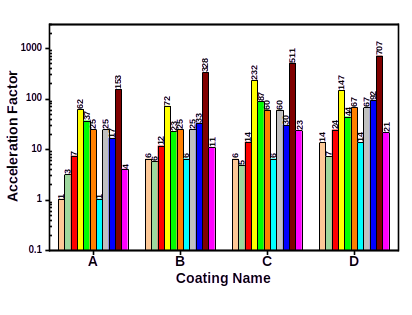
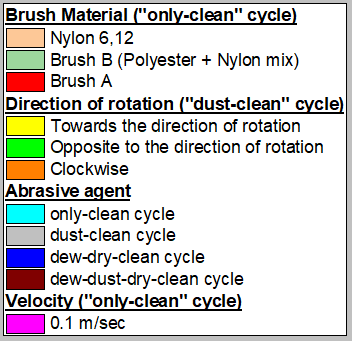
Acceleration factors (with respect to microfibre brush) by which coatings A, B, C and D degrade under various conditions.